
Employee Life Cycle Management | 6 Stages of Employee Life Cycle
Employee Life Cycle Management: Understand 6 Stages of Employee Life Cycle
- Last Updated: January 15, 2026
- Pricing Verified: January 15, 2026
- Features Checked: January 2026
About This Review & Author
Reviewed by: Shivam Gupta, HR Specialist at Pitch N Hire
- Experience: 10+ years in HR and recruitment management
- Previous Role: HR Specialist, Gigde Global
- Current Position: HR Specialist, Pitch N Hire
- Expertise Focus: ATS platform evaluation, UK recruitment compliance, HR technology implementation
- Contact: info@pitchnhire.com | LinkedIn: Pitch N Hire
The modern workplace has evolved dramatically and so has the approach to managing talent. Employee life cycle management has emerged as a strategic framework that transforms how organizations attract, develop, and retain their workforce. This comprehensive guide explores the stages of employee life cycle, best practices, and how technology is revolutionizing lifecycle HR.
What Is Employee Life Cycle Management?

Employee life cycle management refers to the strategic approach of managing an employee's entire journey within an organization—from the moment they first learn about your company to their eventual departure. This holistic framework ensures that every touchpoint in the employee experience is optimized for engagement, productivity, and mutual success.
In HR terms, employee life cycle management in HR encompasses all processes, policies, and practices that shape how employees interact with and contribute to an organization throughout their tenure. Unlike traditional HR management, which often operates in silos with separate teams handling recruitment, training, and retention, lifecycle HR integrates these functions into a cohesive strategy.
Consider a real-world example: A technology company implementing employee life cycle management might track a software engineer's journey from initial job posting engagement through recruitment, onboarding, skill development, promotion opportunities, and eventually their transition out of the company. Each stage is carefully managed to maximize both employee satisfaction and organizational outcomes.
The Importance of Employee Life Cycle Management
Understanding the importance of employee life cycle management is crucial for any organization aiming to build a competitive advantage through its people. Here's why this approach matters:
Improves Employee Engagement and Satisfaction When organizations adopt lifecycle HR practices, they create consistent, positive experiences at every stage. Employees feel valued and supported, leading to higher engagement scores and improved workplace morale. Research shows that engaged employees are more productive, innovative, and committed to organizational goals.
Reduces Hiring Costs and Employee Turnover One of the most compelling benefits of employee life cycle management is its impact on retention. By identifying and addressing pain points throughout the employee journey, organizations can significantly reduce turnover rates. Considering that replacing an employee can cost anywhere from 50% to 200% of their annual salary, the financial benefits are substantial.
Enables Structured Workforce Planning Lifecycle HR provides visibility into workforce trends, skills gaps, and future talent needs. This data-driven approach allows HR teams to plan proactively rather than reactively, ensuring the organization always has the right people in the right roles.
Enhances Compliance and HR Transparency Managing the full employee life cycle creates clear documentation and standardized processes that support regulatory compliance. From hiring practices to termination procedures, having structured lifecycle HR processes reduces legal risks and promotes fairness.
Supports Long-Term Business Growth Organizations that excel at employee life cycle management build stronger employer brands, attract top talent more easily, and develop internal capabilities that drive sustainable growth.
Understanding the HR Life Cycle vs Employee Life Cycle

While often used interchangeably, the HR life cycle and employee life cycle have distinct meanings that are important to understand.
What is HR Life Cycle? The HR life cycle refers to the various HR processes and functions that support workforce management—including recruitment, compensation, benefits administration, performance management, and compliance. It's the operational framework through which HR departments deliver services.
What is Employee Life Cycle? The employee life cycle focuses specifically on the employee's experience and journey through the organization. It's employee-centric, emphasizing how each stage affects the individual's engagement, development, and satisfaction.
The key difference lies in perspective: the HR life cycle is process-oriented, while the employee life cycle is experience-oriented. However, these concepts overlap significantly, and aligning both is critical for HR success. When HR processes support positive employee experiences at each stage, organizations achieve the best outcomes.
Stages of Employee Life Cycle: Overview
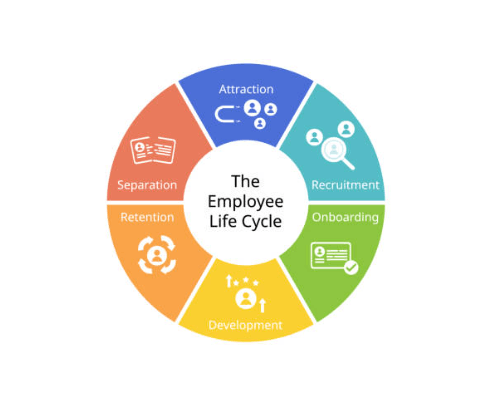
Organizations typically structure the stages of employee life cycle into either six or seven distinct phases. Both frameworks are widely used, with the choice often depending on organizational size, complexity, and specific HR priorities.
The 6-stage employee life cycle model provides a streamlined approach suitable for small to mid-sized organizations, while the 7 stages of employee life cycle offers more granular distinctions that larger enterprises often prefer. Let's explore both models in detail.
What Are the 6 Stages of Employee Life Cycle?
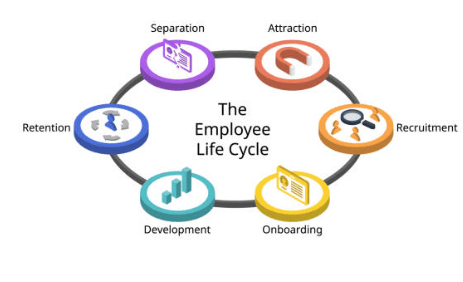
1. Attraction
The first of the stages of employee life cycle begins before a candidate even applies. Attraction focuses on employer branding and talent outreach—creating awareness of your organization as a desirable place to work.
Key activities include developing a compelling employer value proposition, maintaining an engaging careers website, leveraging social media for talent marketing, and building relationships with potential candidates through networking events and university partnerships. Strong attraction strategies ensure you reach qualified candidates who align with your organizational culture and values.
2. Recruitment
Recruitment is where potential becomes reality. This stage involves screening applications, conducting interviews, assessing candidate fit, and making selection decisions. The role of HR and hiring managers is to identify candidates who possess not only the required skills but also the potential for long-term success within the organization.
Modern employee life cycle management emphasizes structured recruitment processes that reduce bias, improve candidate experience, and increase the quality of hire. This includes using standardized interview questions, diverse hiring panels, and data-driven selection criteria.
3. Onboarding
Onboarding is a critical stage that significantly impacts employee retention and time-to-productivity. Effective onboarding goes beyond paperwork and orientation—it encompasses comprehensive training programs, cultural integration, and role alignment.
Research indicates that strong onboarding programs can improve retention by 82% and productivity by over 70%. This stage should introduce new hires to organizational values, clarify job expectations, provide necessary tools and resources, and establish early connections with colleagues and mentors.
4. Development
The development stage focuses on continuous learning and growth. Organizations invest in skill development programs, leadership training, cross-functional experiences, and career pathing initiatives.
Performance management systems play a crucial role here, providing regular feedback, identifying development opportunities, and aligning individual growth with organizational needs. Employee life cycle management recognizes that development isn't a one-time event but an ongoing process that keeps employees engaged and competitive.
5. Retention
Retention strategies aim to keep top talent engaged and committed to the organization. This stage involves employee recognition programs, competitive compensation and benefits, career advancement opportunities, work-life balance initiatives, and creating a positive organizational culture.
Effective lifecycle HR approaches treat retention as an active process requiring continuous attention rather than a passive hope that employees will stay. Regular engagement surveys, stay interviews, and responsive leadership all contribute to stronger retention outcomes.
6. Separation
The final stage acknowledges that all employment relationships eventually end. Separation can occur through resignation, retirement, or termination. How organizations manage this stage significantly impacts employer brand and alumni relationships.
Best practices include conducting thoughtful exit interviews, ensuring smooth knowledge transfer, maintaining positive relationships with departing employees, and handling all compliance requirements professionally. Many organizations now recognize that former employees can become valuable brand ambassadors, clients, or even boomerang employees who return with enhanced skills.
7 Stages of Employee Life Cycle (Extended Model)
The 7 stages of employee life cycle model separates engagement and performance/development into distinct phases, providing more targeted focus:
- Attraction - Building employer brand and generating candidate interest
- Recruitment - Selecting and hiring the right talent
- Onboarding - Integrating new hires into the organization
- Engagement - Actively fostering connection, motivation, and commitment
- Performance & Development - Managing performance and building capabilities
- Retention - Implementing strategies to keep valuable employees
- Exit & Offboarding - Managing departures and maintaining relationships
Why Large Organizations Prefer the 7-Stage Model
Larger enterprises often adopt this expanded framework because it allows for more specialized HR teams and programs. Separating engagement from development acknowledges that these require different strategies and metrics. Engagement focuses on emotional connection and motivation, while performance and development emphasize skills, results, and career progression.
End-to-End Employee Life Cycle Management
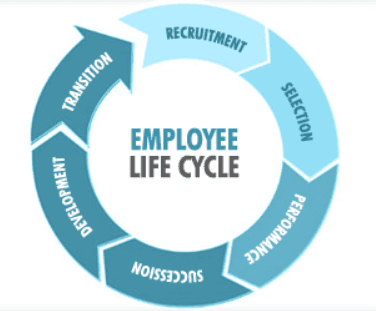
End-to-end employee life cycle management represents a holistic approach that integrates all stages into a seamless, data-driven process. This means managing employee data, experiences, and touchpoints from initial attraction through final exit and beyond.
The benefits of a centralized lifecycle HR approach include consistent employee experiences across all stages, better data visibility for strategic decision-making, improved efficiency through integrated systems, and enhanced ability to identify and address issues before they escalate.
However, manual employee life cycle management presents significant challenges. Disconnected systems create data silos, inconsistent processes lead to variable employee experiences, manual tracking increases errors and administrative burden, and lack of real-time insights prevents proactive intervention.
Role of Technology in Employee Life Cycle Management
Employee life cycle management software has revolutionized how HR teams operate. These platforms provide integrated solutions that support every stage of the employee journey.
Key Features of Lifecycle HR Platforms:
- Automated workflows that streamline repetitive tasks like onboarding checklists and performance review cycles
- Analytics and reporting that provide insights into engagement, retention, and productivity trends
- Compliance management that ensures adherence to labor laws and regulations
- Self-service portals that empower employees to manage their own information
- Integration capabilities that connect with existing HR systems and business tools
Benefits for HR Teams and Leadership
Technology enables HR professionals to shift from administrative tasks to strategic initiatives. With employee life cycle management software, teams can identify retention risks before employees leave, make data-driven decisions about talent investments, scale HR operations without proportional headcount increases, and provide personalized experiences at scale.
How Pitch N Hire Supports Employee Life Cycle Management
Overview of Pitch N Hire
Pitch N Hire is an innovative HR and hiring technology platform designed to support end-to-end employee life cycle management. By focusing on the critical early stages of attraction, recruitment, and onboarding, Pitch N Hire sets the foundation for long-term employee success.
Methodology Used by Pitch N Hire
Skill-Based Talent Attraction Pitch N Hire emphasizes competencies and capabilities over traditional credentials, helping organizations attract diverse talent pools and reduce unconscious bias in the hiring process.
Intelligent Candidate Screening Advanced algorithms and assessment tools evaluate candidates objectively, identifying those most likely to succeed in specific roles and organizational environments.
Structured Evaluation and Assessment The platform provides standardized frameworks for evaluating candidates, ensuring consistency and fairness while improving the quality of hiring decisions.
Seamless Onboarding Readiness Pitch N Hire bridges the gap between recruitment and onboarding, ensuring new hires have everything they need to start strong from day one.
Lifecycle Data Continuity Information gathered during recruitment flows seamlessly into subsequent lifecycle HR stages, creating a comprehensive employee record that supports ongoing development and retention strategies.
Why Pitch N Hire Is Good for This Role
Organizations using Pitch N Hire benefit from:
- Enabled end-to-end employee life cycle management through integrated data and processes
- Improved quality of hire and role fit through skill-based matching
- Reduced early attrition by ensuring better alignment between candidates and positions
- Strengthened HR decision-making through analytics and insights
- Scaled lifecycle HR operations without compromising candidate or employee experience
G2 – Verified User Reviews
Kiran P. – Director (Small Business)
“Excellent platform for easy recruiting. Not too complicated, affordable, and the support team resolves issues quickly. Implementation was simple.”
Source:
Read Pitch N Hire customer review on G2

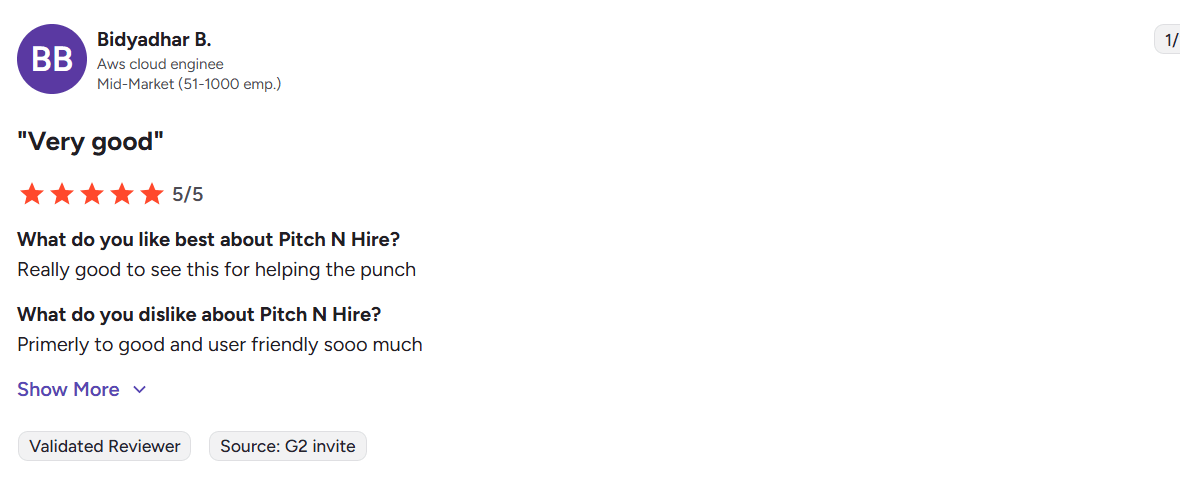
Bidyadhar B. – AWS Cloud Engineer (Mid-Market)
“Very good and user-friendly.”
Source:
Read Pitch N Hire customer review on G2
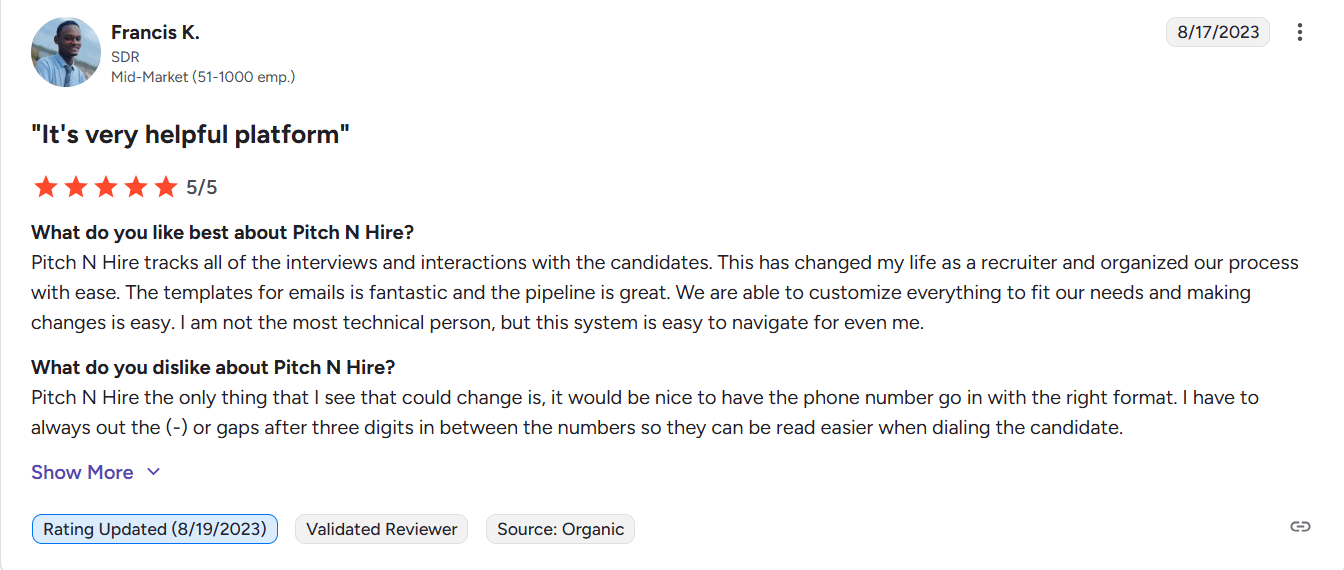
Francis K. – Sales Development Representative (Mid-Market)
“It tracks all interviews and interactions with candidates. Email templates are useful, and the pipeline is easy to navigate even for non-technical users.”
Source:
Read Pitch N Hire customer review on G2
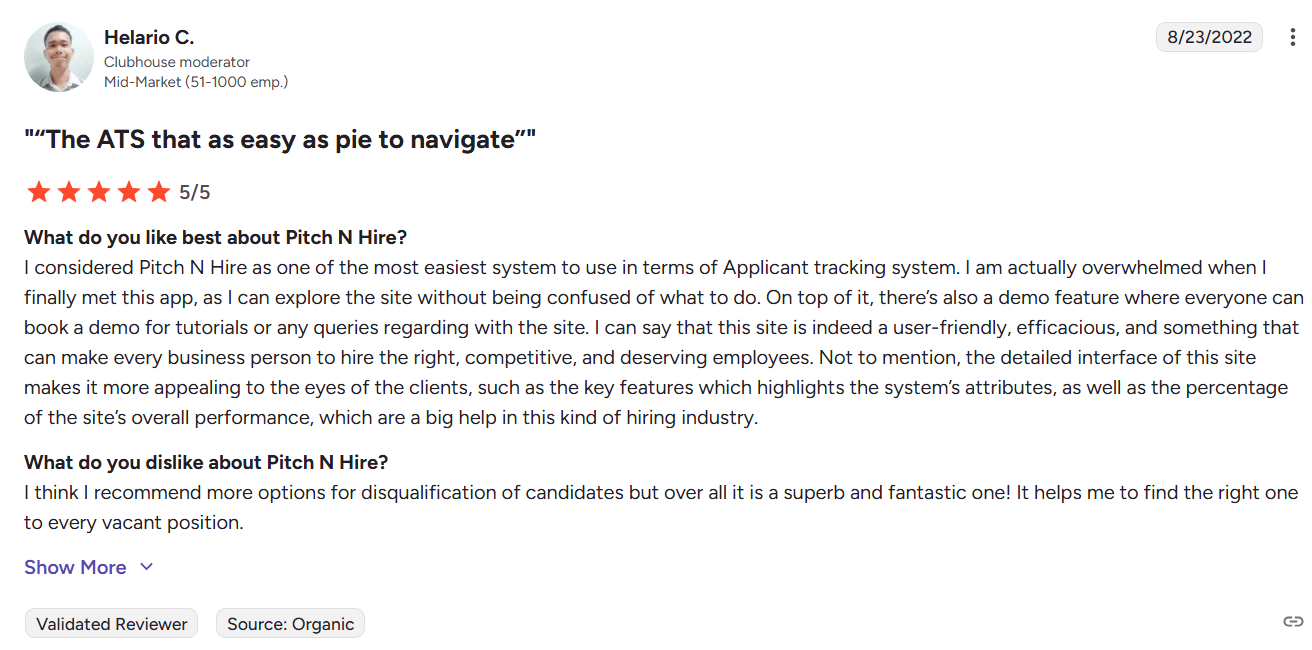
Helario C. – Clubhouse Moderator (Mid-Market)
“One of the easiest ATS systems to use. Intuitive and efficient.”
Source:
Read Pitch N Hire customer review on G2
Anant G. – Hiring Manager (Mid-Market)
“Excellent product with reasonable pricing that automates staffing workflows effectively.”
Source:
Read Pitch N Hire customer review on G2
Nikhil S. – Transcriptionist (Small Business)
“Perfect for job search and recruitment. The tagging and navigation features make the platform easy to use.”
Source:
Read Pitch N Hire customer review on G2
Vibhu – India
“Pitch N Hire offers a refreshing approach to job searching. It focuses on compatibility and culture fit rather than only resumes.”
Source:
Read Pitch N Hire customer review on Trustpilot
Why Pitch N Hire Is a Trusted Lifecycle HR Platform
Experience
Pitch N Hire brings practical employee life cycle management implementation insights gained from supporting diverse organizations across industries. The platform reflects real-world HR challenges and solutions.
Expertise
With deep understanding of lifecycle HR and hiring intelligence, Pitch N Hire combines HR best practices with cutting-edge technology to deliver measurable results.
Authoritativeness
As a trusted platform supporting structured HR processes, Pitch N Hire has established itself as a reliable solution for organizations serious about optimizing their employee life cycle.
Trustworthiness
Security, transparency, and compliance are fundamental to Pitch N Hire's design, ensuring organizations can confidently manage sensitive employee data throughout the entire lifecycle HR journey.
Employee Life Cycle Management Job Description
As employee life cycle management becomes increasingly strategic, specialized roles have emerged. An employee life cycle management job description typically includes:
Key Responsibilities:
- Designing and implementing lifecycle HR programs across all stages
- Analyzing employee data to identify trends and improvement opportunities
- Collaborating with HR and business leaders to align lifecycle strategies with organizational goals
- Managing employee life cycle management software and related technologies
- Developing metrics and dashboards to measure lifecycle effectiveness
- Ensuring compliance throughout the employee journey
Required Skills and Competencies:
- Deep understanding of HR processes and employee life cycle frameworks
- Data analysis and interpretation skills
- Project management capabilities
- Change management experience
- Technology proficiency, especially with HRIS and employee life cycle management software
- Excellent communication and stakeholder management abilities
Career Opportunities
Professionals specializing in lifecycle HR can pursue roles such as Employee Experience Manager, Talent Management Specialist, HR Analytics Manager, or Director of People Operations. As organizations increasingly recognize the importance of employee life cycle management, demand for these expertise continues to grow.
A Study on Employee Life Cycle Management
A study on employee life cycle management reveals compelling evidence for its effectiveness. Academic and corporate research consistently demonstrates that organizations with mature lifecycle HR practices outperform their peers across multiple dimensions.
Impact on Employee Engagement and Performance
Studies show that companies with strong employee life cycle management report 21% higher profitability and 17% higher productivity. Employees in these organizations demonstrate greater discretionary effort, innovation, and commitment to quality.
Organizational Benefits Backed by Studies
Research indicates that integrated lifecycle HR approaches result in 25% lower turnover rates, 30% faster time-to-productivity for new hires, improved employer brand perception and candidate quality, and stronger leadership pipelines developed through structured development programs.
Real-World HR Insights
Organizations successfully implementing employee life cycle management share common characteristics: leadership commitment to employee experience, investment in appropriate technology and tools, data-driven decision-making cultures, and continuous refinement based on employee feedback.
Employee Life Cycle Management PPT & PDF Applications
Employee life cycle management PPT presentations and employee life cycle management PDF documents serve valuable purposes in organizational learning and communication.
Use Cases for PPTs in HR Training:
- Onboarding presentations introducing new hires to the employee life cycle
- Leadership development programs teaching managers their role at each stage
- Board presentations demonstrating HR's strategic impact
- Change management communications when implementing new lifecycle HR programs
Use Cases for PDFs in Documentation:
- Employee handbooks outlining the stages of employee life cycle and available resources
- Manager guides for supporting employees at each phase
- Policy documents ensuring consistent lifecycle HR practices
- Reference materials for HR team members
Organizations often convert lifecycle HR frameworks into these learning assets to ensure consistent understanding across all stakeholders.
Best Practices for Effective Employee Life Cycle Management
Success with employee life cycle management requires thoughtful implementation. Consider these proven practices:
Align HR Strategy with Business Goals Your lifecycle HR approach should directly support organizational objectives. If business growth is the priority, focus on attraction and development stages. If innovation is key, emphasize engagement and retention of creative talent.
Use Data-Driven HR Decisions Implement robust analytics to understand what's working and what isn't at each stage of the employee life cycle. Track metrics like time-to-hire, onboarding completion rates, engagement scores, internal mobility rates, and turnover by stage.
Automate Repetitive HR Tasks Leverage employee life cycle management software to handle administrative work, freeing HR professionals to focus on strategic initiatives that require human judgment and creativity.
Maintain Transparent Communication Employees should understand what to expect at each stage and how to access resources and support. Clear communication builds trust and reduces anxiety during transitions.
Continuously Measure Employee Experience Regular pulse surveys, stay interviews, and exit interviews provide insights into how employees perceive each stage. Use this feedback to refine your approach continuously.
Conclusion
Employee life cycle management represents a fundamental shift in how organizations approach their most valuable asset—their people. By understanding and optimizing each of the stages of employee life cycle, companies create experiences that attract top talent, develop capabilities, and retain high performers.
Whether you adopt the 6 stages of employee life cycle or the 7 stages of employee life cycle model, the key is integration and intentionality. With the right combination of strategy, technology like employee life cycle management software, and commitment to continuous improvement, organizations can build sustainable competitive advantages through superior talent management.
The importance of employee life cycle management will only grow as competition for talent intensifies and employee expectations evolve. Organizations that invest in end-to-end employee life cycle management today position themselves for success tomorrow.
FAQs: Employee Life Cycle Management
What is employee life cycle management in HR? Employee life cycle management in HR is a strategic approach to managing every stage of an employee's journey with an organization, from initial attraction through eventual separation, ensuring optimal experiences and outcomes at each phase.
What are the stages of employee life cycle? The stages of employee life cycle typically include attraction, recruitment, onboarding, development, retention, and separation in the 6-stage model, or attraction, recruitment, onboarding, engagement, performance & development, retention, and exit & offboarding in the 7-stage model.
What is end-to-end employee life cycle management? End-to-end employee life cycle management refers to an integrated, holistic approach that manages all stages of the employee journey through connected processes, consistent data, and unified technology platforms.
Why is employee life cycle management important? The importance of employee life cycle management lies in its ability to improve engagement, reduce turnover, enable better workforce planning, enhance compliance, and support long-term business growth through optimized employee experiences.
How does Pitch N Hire support lifecycle HR? Pitch N Hire supports lifecycle HR by providing skill-based talent attraction, intelligent screening, structured assessment, seamless onboarding readiness, and data continuity across stages, enabling organizations to implement effective employee life cycle management from the start of the employee journey.
Contact: info@pitchnhire.com | https://pitchnhire.com/contact-us
Applicant Tracking System for Recruiters
Best Applicant Tracking System 2026 | Top ATS Software Compared
Best Applicant Tracking System 2026 USA | Top ATS Software
Best Applicant Tracking System 2026 UK | Top ATS Platforms
Best Applicant Tracking System 2026 Canada| Top ATS Software
Best Applicant Tracking System India 2026
Best Applicant Tracking System Online 2026 | Top 10 ATS
ATS Recruitment Software Comparison | Best ATS Comparison
Best ATS for Small Business Software
Best Applicant Tracking System 2026 Australia | Top ATS Software
ATS for High Volume Hiring 2026
ATS Tracking Systems UAE 2026 | Applicant Tracking Software
best applicant tracking system for small business
applicant tracking system for small business
healthcare recruitment software
staff scheduling software healthcare
healthcare employee scheduling software
Manufacturing Applicant Tracking System: Top 10 Recruitment Software
Top 10 ATS for Logistics Companies | Best Applicant Tracking Systems for Hiring
Hospitality Applicant Tracking System | Top 10 Restaurant Hiring Software